
A Walk at Plant Speed
Okay, this week’s update on The Plant Project is about taking it slow! Everything is really starting to ramp up as we prepare for our upcoming practicums and things are starting to get more and more overwhelming. So, this week I was eager to take a break, go on my walk, and get outside to learn about some plants. Since life is so structured right now, I decided that this week I would not look for specific types of plants, but to seek out any plant that speaks to me.
My walk this week was along the Elk Lake 10km trail. I did not walk the entire 10km loop, but I did walk about 3km along the lake. It was a very cloudy day, but it was still an enjoyable and peaceful time. Below are the species that I found this week:
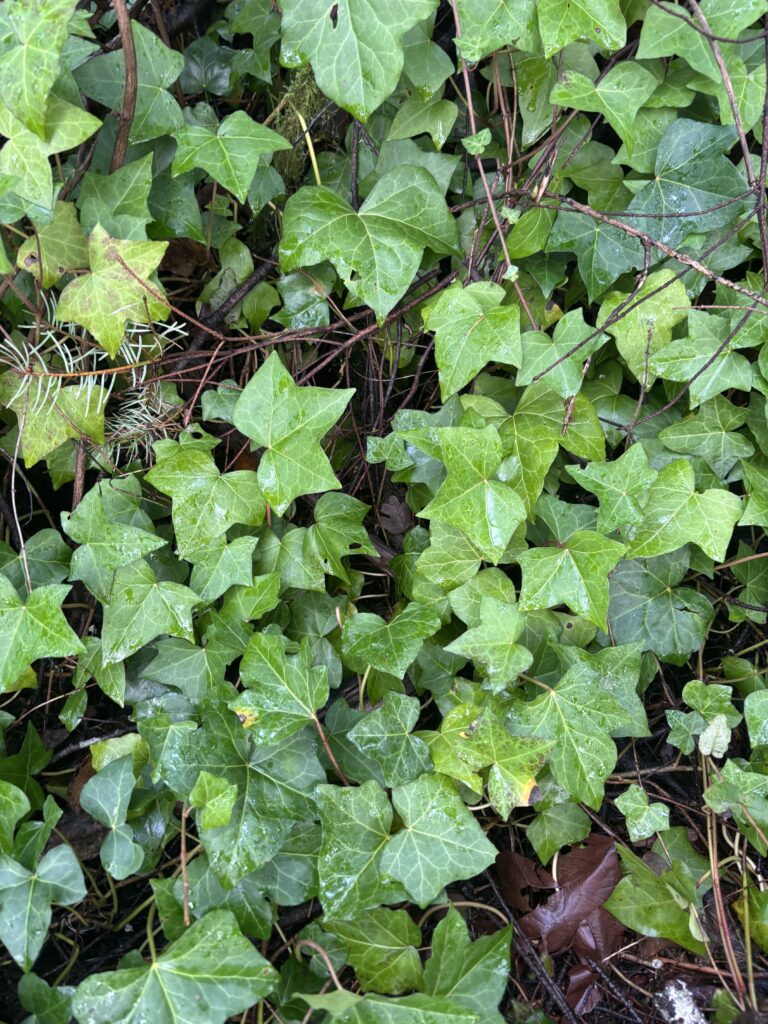
English Ivy – Hedera helix
I have always noticed English Ivy in my nature walks and around Victoria, but never knew anything about it. Did you know that this is an invasive species? It is a very powerful one at that. It originally comes from Europe and grows extremely fast, spreading across the ground and climbing up trees to take over areas where native plants should grow. It harms the environment by smothering native plants so they can’t survive, weighing down trees until branches break or trees fall over, and creating hiding spots for pests like rats while offering little value to local wildlife. To identify English ivy you can look for its shiny, dark green leaves that have 3-5 pointed sections (like a hand), its woody vines that stick to walls and trees with tiny roots, and the way it forms thick blankets on the ground or climbs high up into trees. It also stays green all year round, unlike many native plants.
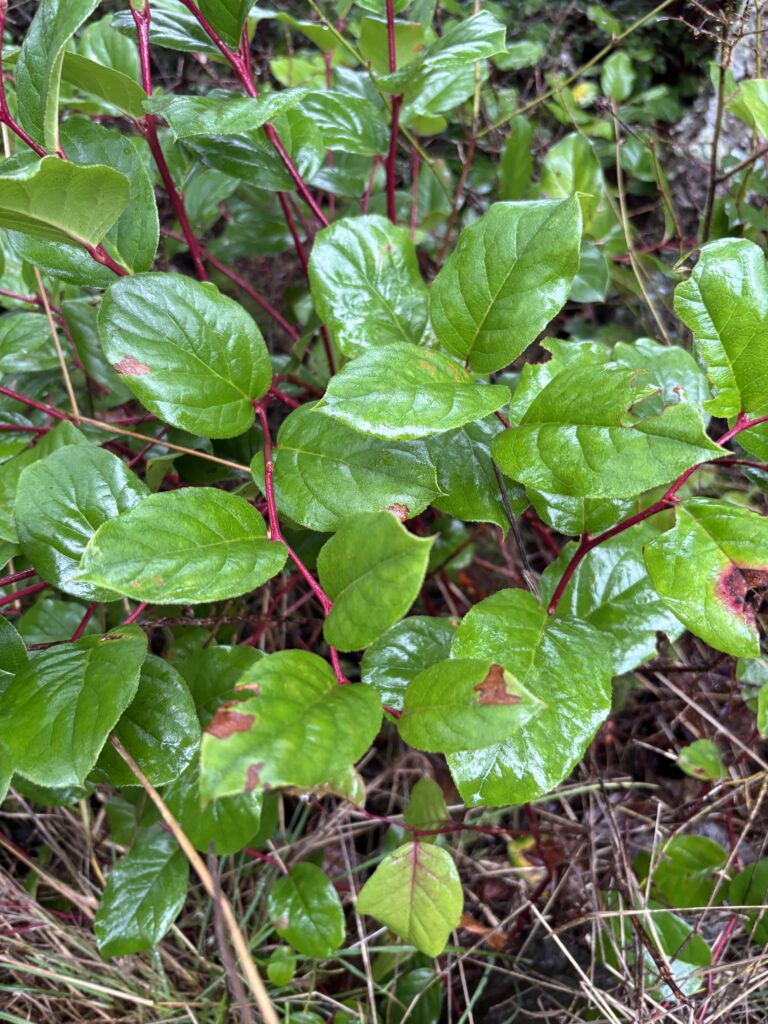
Salal – Gaultheria shallon
Salal is another plant that I see so often. When I was a summer camp leader, it was always a plant that I noticed on out outdoor walks. Salal is a native plant that you can identify by its thick, waxy, oval leaves that are shiny and dark green. It also has stems that grow in a zigzag pattern and small pink or white bell-shaped flowers that hang down in spring and summer. The flowers turn into dark purple berries that Indigenous peoples use to thicken jams because of their high pectin content. The new/young leaves and berries can be used as an appetite suppressant if you chew them, and the fibres can be used as a fire starter. I will have to remember these facts if I ever get lost in the woods. Salal is super tough and can grow almost anywhere and it’s one of the most common plants in temperate forests.
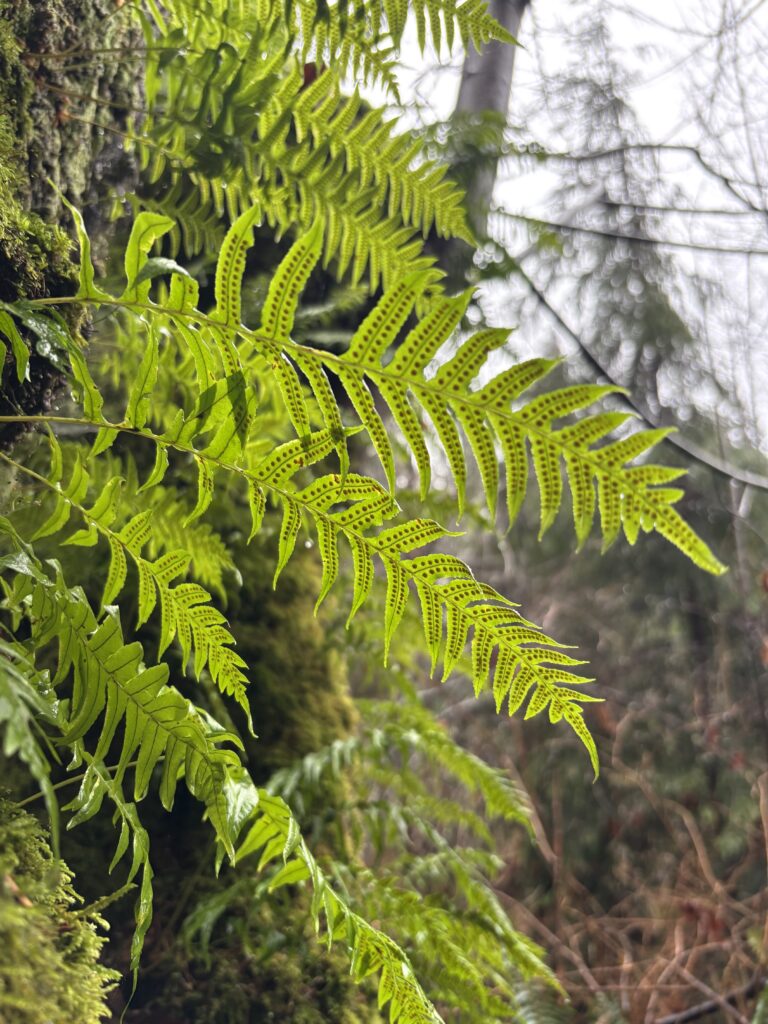
Licorice Fern – Polypodium glycyrrhiza
Licorice fern is a native fern that you can recognize by its long, skinny leaves that have matching leaflets on both sides like a feather. This fern grows on mossy tree trunks (like in this picture) and rocks instead of in dirt. This place also completely dies back and disappears in summer then grows back green when the fall rains come. Unlike most plants that die when it gets too dry, licorice fern just takes a summer nap and wakes back up when the rain returns. The coolest part is that if you chew the roots, they actually taste like licorice candy! That’s why it’s called licorice fern! Indigenous peoples chewed the roots as a snack and to help sore throats and coughs, and they used it as medicine for colds and upset stomachs. You’ll see licorice fern growing all over the trunks of big maple trees in the forest, making them look fuzzy and green with moss. I think this plants was my favourite find of the week.
That concludes The Plant Project for this week! Can’t wait to see what next week has in store. This week, everything was identified using either INaturalist, or the Pacific Northwest Plant Knowledge Cards that my classmate Annika lent me.