
The Plant Project Gets Fungi-fied
Welcome back to The Plant Project, with a twist! This week, we’re having a little fungi takeover. I know fungi are not plants, but they are something I’ve always been curious about and never really taken the time to learn, so here we are. Consider this a Plant Project expansion pack.
I headed out to Elk Lake again on Wednesday morning and it was gloomy. Grey skies, steady rain, the whole moody Pacific Northwest experience. What I didn’t manage to photograph was all of the slugs and worms out and about during this rainy day.
To help with identification, I used iNaturalist. Even iNaturalist had a tough time pinning down the exact species on some of these finds, which honestly just confirmed what I already suspected… fungi ID is hard. Way harder than plant ID, at least for me. INaturalist gave me enough of an identification to go off of. From what they gave me, I was able to learn a little bit more about the species or the taxonomic group it gave me. Here is what I found this week.
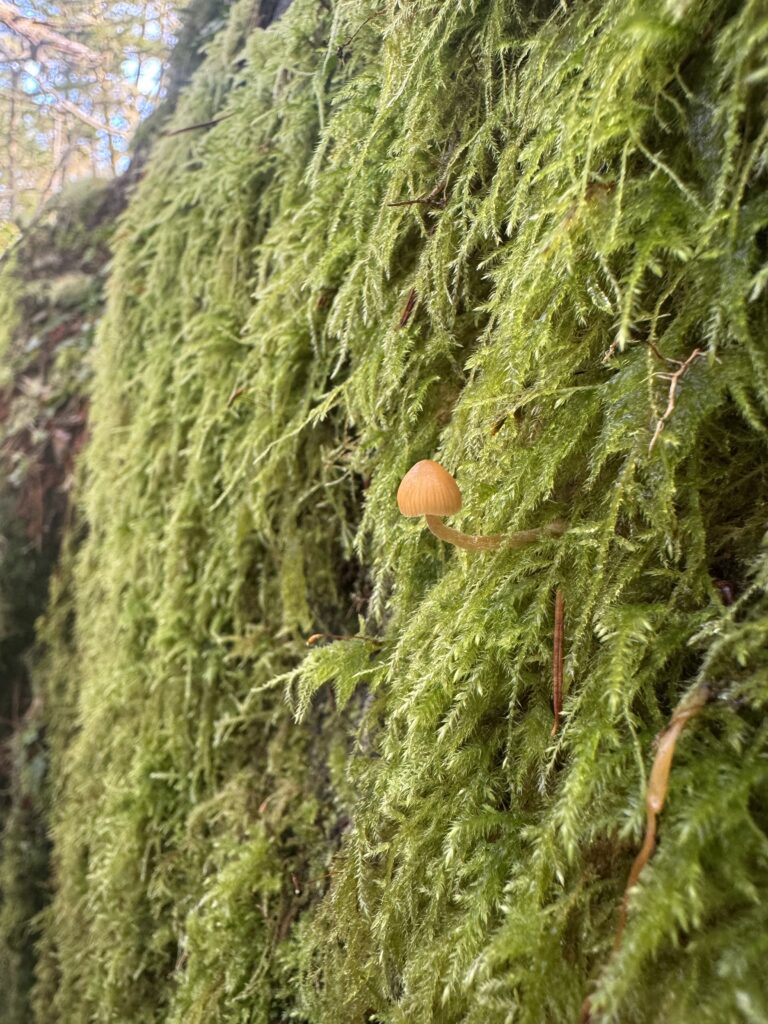
Galerina semilanceata
Galerina semilanceata does not have a common name, which feels fitting for such an understated little mushroom. It can be identified by its pale yellowish-tan cap with visible striations, a slender stem that stays light in colour as it ages, and its preference for growing in moss beds (like in my photo). Like all the Galerina genus, it is saprobic, meaning it breaks down decaying organic matter and returns nutrients to the soil. Some Galerinas contain deadly amatoxins (cause severe liver injury and necrosis upon exposure), it is best admired from a distance. As a fun fact, the name Galerina comes from the Latin word for a helmet or cap made of animal skin, a nod to the shape of the cap!
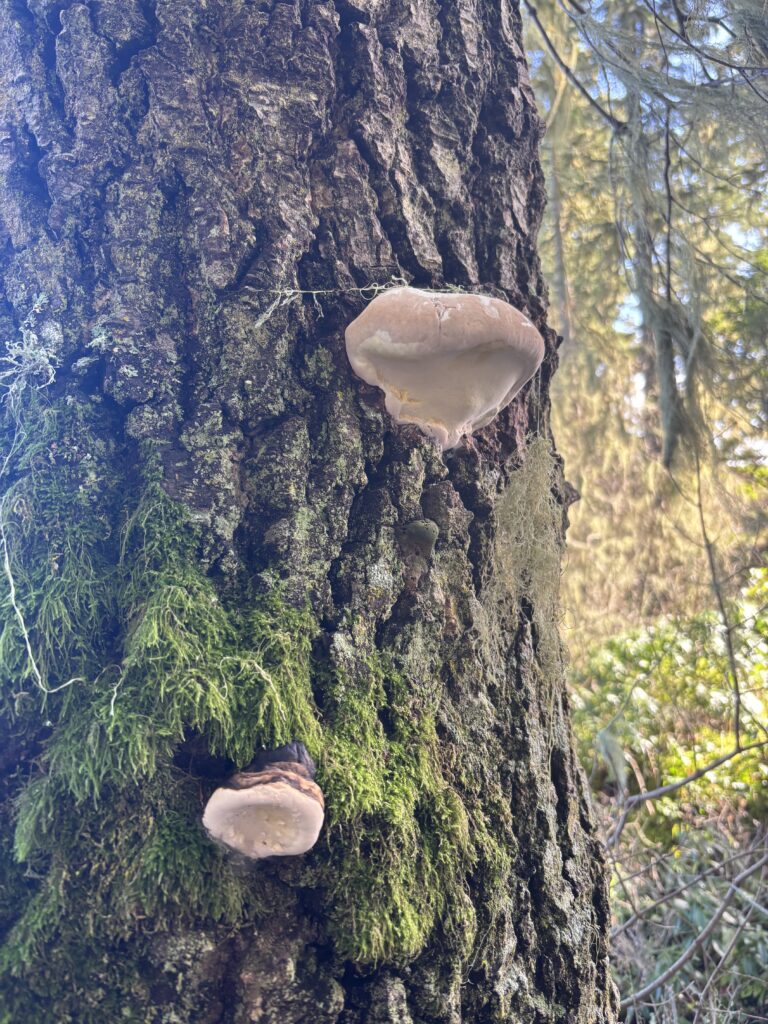
Genus Fomitopsis
Fomitopsis is a genus of bracket fungi, sometimes called shelf or conk fungi, that you have likely walked past without knowing the name. They grow directly out of trees or logs in a shelf-like formation, with a pale pore surface on the underside rather than gills, and a tough woody texture. Getting to the species level within this genus was difficult. Even INaturalist struggled with it. Ecologically, they are important brown-rot fungi, breaking down wood and returning nutrients to the forest floor. As a fun fact, some species in this genus can grow for many years, adding a new layer each season, and you can actually estimate the age of the bracket by counting those layers, similar to counting tree rings!
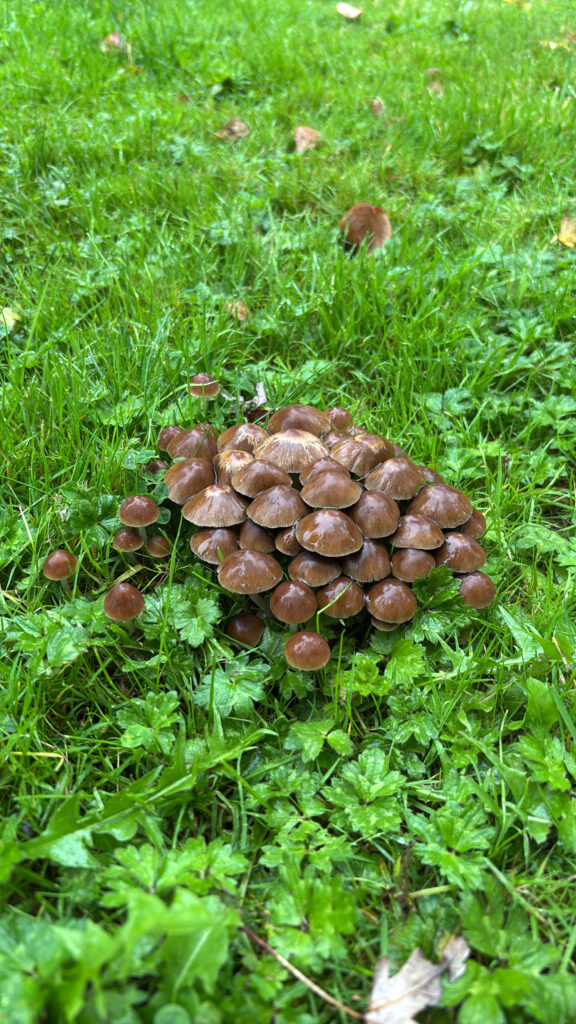
Clustered Brittlestem – Britzelmayria multipedata
The Clustered Brittlestem is honestly one of the more charming finds on a rainy walk. It is identified by its small brown cap, tall white stem, and its habit of growing in dense clusters with the bases of the stems fused together. It is also hygrophanous, meaning it changes colour depending on moisture, appearing darker and shiny when wet and fading to a pale ochre as it dries. Ecologically it is saprotrophic (meaning it feeds on and breaks down dead organic matter), returning nutrients from buried and fallen wood back to the soil. As a fun fact, the name multipedata means “with many feet,” a nod to the way all those individual stems share a single base, like they are all treading on each other’s toes!
This week’s walk was a good reminder that there is always something new to notice outside, even on a rainy Wednesday morning. Fungi identification is no joke, but I was still able to learn a little more about what I found along the way. Until next week!